Chased by rhinos, killer bees for a TV show – what’s it like working with David Attenborough?
Advert
CNA Lifestyle
Chased past rhinos, killer bees for a TV show – what'due south it like working with David Attenborough?
Scott Alexander, series producer of BBC Earth's latest serial Seven Worlds, I Planet, shares his experiences working with the famous Tv set host and warns nosotros've only got 1 planet.
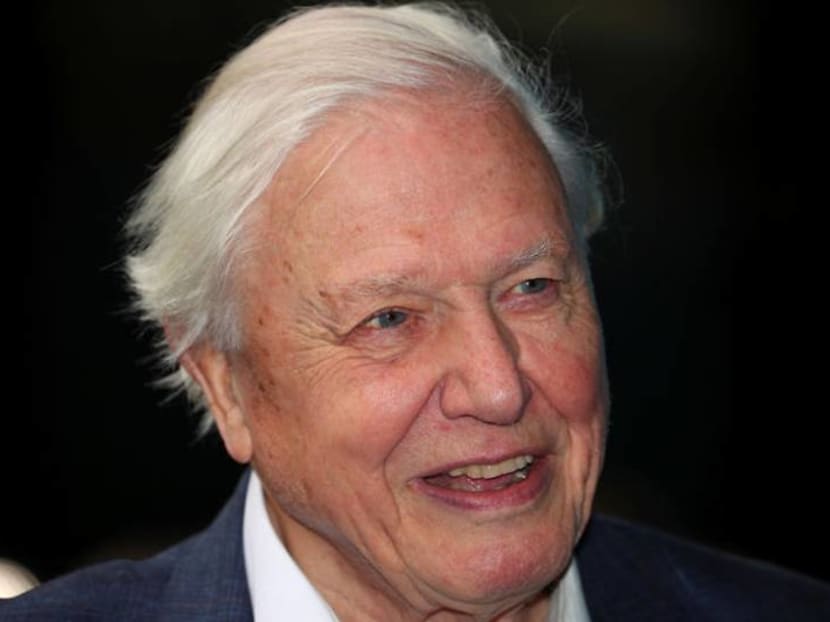
FILE PHOTO: Broadcaster and motion-picture show maker David Attenborough attending the premiere of Blue Planet II at the British Film Institute in London, United kingdom. (Photo: Reuters/Hannah McKay)
04 Nov 2022 06:30AM (Updated: 18 May 2022 01:41AM)
Imagine you are making a nature picture show presented by none other than Sir David Attenborough. (You've probably grown up watching them, so you lot know what I'm talking about.)
You lot are in a S American desert and your task is to document penguins nesting in a massive colony.
"To avert agonizing the birds, yous've got to walk out in these boxes. Y'all sit downward, y'all cut a picayune hole out, yous put the camera there and you lot film. You basically bake in the box all twenty-four hour period. At the finish of the day, y'all lift the box up and walk out. All yous can come across is this box moving beyond the horizon with these footling anxiety at the lesser," chuckled Scott Alexander, who produces films for the BBC'southward iconic Natural History Unit.
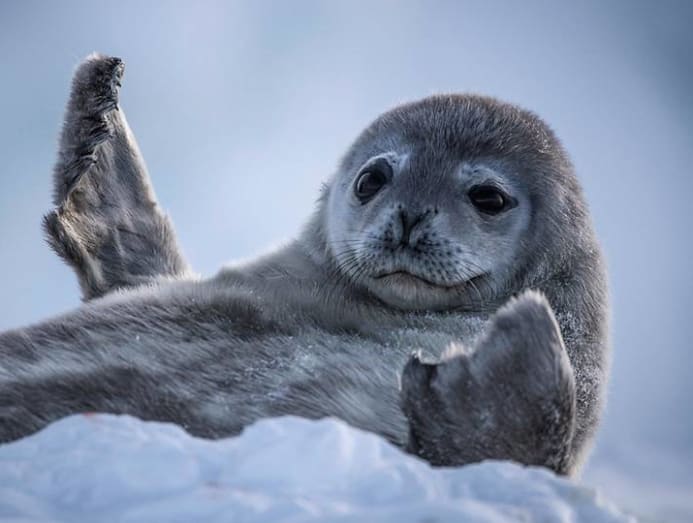
In the 20 years that he has been on the job, he told me, he'due south seen endless such situations that are surreal, hilarious, exhilarating and fifty-fifty "a bit mad" at times.
"I've been chased upwards trees past rhinos, most stepped on a hyena and been chased by killer bees," he said. Still, ironically plenty, he chuckled, "Every fourth dimension I met someone, they would say, 'Oh, you work at the BBC. Take you met David?' Non, 'Oh, yous've been chased past rhinos? That's astonishing.' No. It's, 'Take you lot met Sir David?'"
On BBC Earth'due south newest blockbuster Seven Worlds, One Planet, which premieres today (November 4), Alexander and Attenborough collaborate over again to bring you a sweeping series that covers the seven continents one past i, and the multifariousness of life found on each.
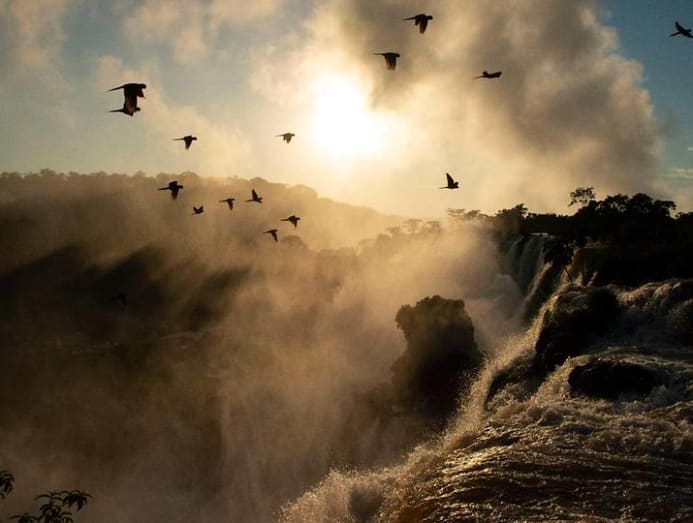
One game-changing affair to wait out for is the all-encompassing use of drones, which allowed the cameras to go closer to wildlife without startling it and provided remarkable new perspectives.
With over 2,000 hours' worth of footage in 41 countries over 92 filming trips, the serial is full of never-earlier-seen stories well-nigh dingoes hunting kangaroos, wild hamsters living in a Vienna graveyard and polar bears hunting beluga whales.
"Nosotros've too got a species of spider that was discovered just as we started filming, that does the near remarkable courtship dance. You might not be a fan of spiders only I defy y'all to dislike this one. He'southward a really sweetness spider," Alexander said. "He's got this piffling double paddle dance, every bit we telephone call it. I think people will be doing the paddle dance at some bespeak."
A 60-YEAR Wait FOR STUB-NOSED MONKEYS
For this series, Attenborough travelled to Antartica and Africa to film the opening and closing sequences, merely his principal job, of course, is to employ his unmistakable vocalisation – a blend of gravitas, dependability and the sexiness of a well-adult cerebral cortex – as narrator.
At 93, he has two fake knees, so he's nonetheless able to get around. And he puts his expert health down to pure luck, he one time told me when I met him a few years ago in Liverpool, pointing out that both of his two brothers are expressionless and that he isn't more virtuous than them, simply simply fortunate.
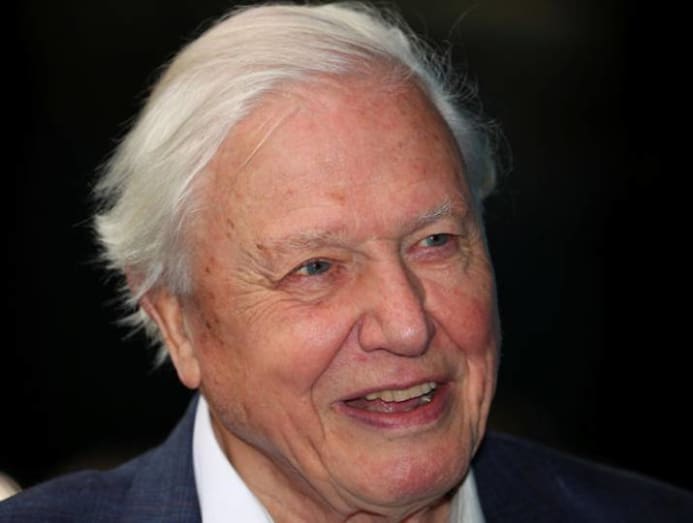
These days, he said, the number of words he speaks per second has gone downwardly; he speaks more slowly and in shorter sentences than he did fifty years agone. Merely 1 affair's for sure: His enthusiasm for the job hasn't slowed at all.
"He's 93, but he still has this boyish enthusiasm for the subject area. He lights upward," Alexander said. "We filmed the stub-nosed monkeys in People's republic of china, and this is a species that David had first read about 60 years ago, early on in his career. He really wanted to become and film them, but at that time, they couldn't get access, so they never did a story. So, it was a joy lx years later to exist able to go back to David and say, 'Look, we filmed the stub-nosed monkeys.' He said, 'Oh, fantastic, amazing – at last, someone's filmed them.'"
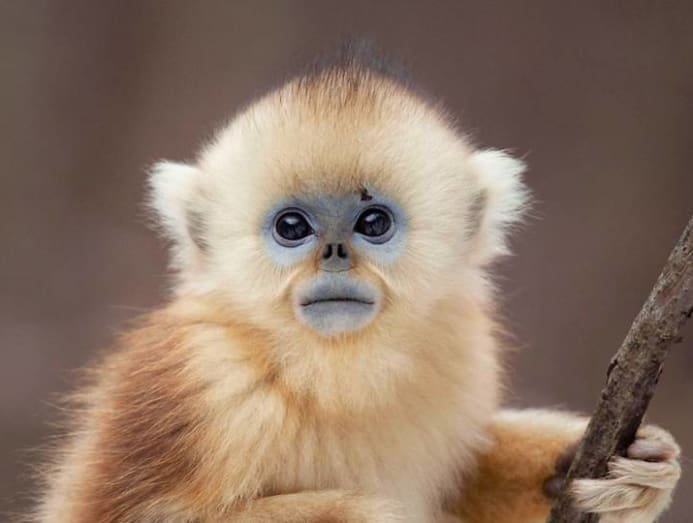
While Attenborough goes over the scripts and questions things to ensure factual correctness, "His passion is the wildlife. We film him and put him on screen but he's always saying, 'Surely you'll be filming the animal now. You don't want to see me, yous want to meet the animals.' 'No, David, we do desire to see a trivial bit of you'," chuckled Alexander, who recalls visiting Singapore together with Attenborough nearly 12 years ago to work on the series Life In Cold Blood, where they documented amphibian species in our mangrove swamps.
FRAGILE, Astonishing AND CAPABLE OF Change
Over the decades that he'due south spent making nature films, Alexander has travelled to every continent and seen firsthand how the planet has changed.
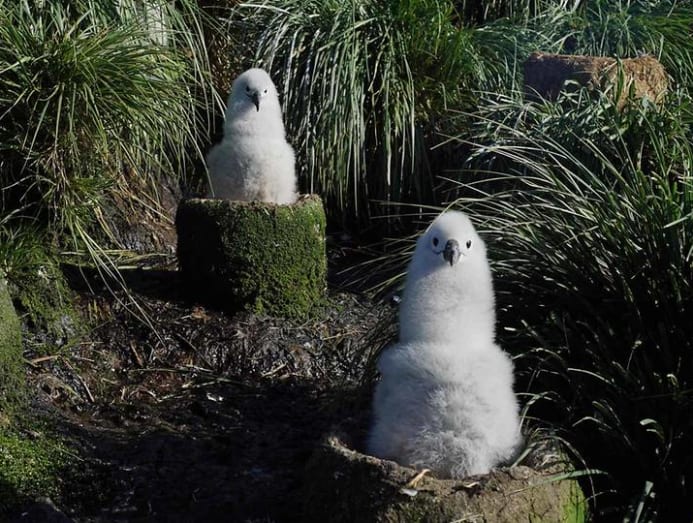
"I thing I started noticing quite a few years ago is that weather condition patterns aren't as predictable. You go in the dry season and it's raining. You go in the wet season and it'southward dry out. And now we're seeing the consequences of those atmospheric condition changes – how it's affecting the wildlife," he said.
For instance, in Antarctica, the grey-headed albatross, already in refuse, are suffering from increased storms – the chicks get blown off their nests and unless they can crawl back on, their parents won't recognise them. "Nosotros've too seen how loss of habitat is affecting wildlife. Nosotros've got an amazing story in Asia almost the Sumatran Rhino. It's the smallest rhinoceros species living on the largest continent, yet at that place isn't room for it."
While nature films used to be as much well-nigh entertainment as education, at present, every bit a natural consequence of the plight of wildlife around the earth, messages of conservation are built into the programme. "I think our audiences await that," Alexander said. "I think if we didn't, people would say, 'Well, hang on a minute, you can't just show the world looking cute. There are issues."
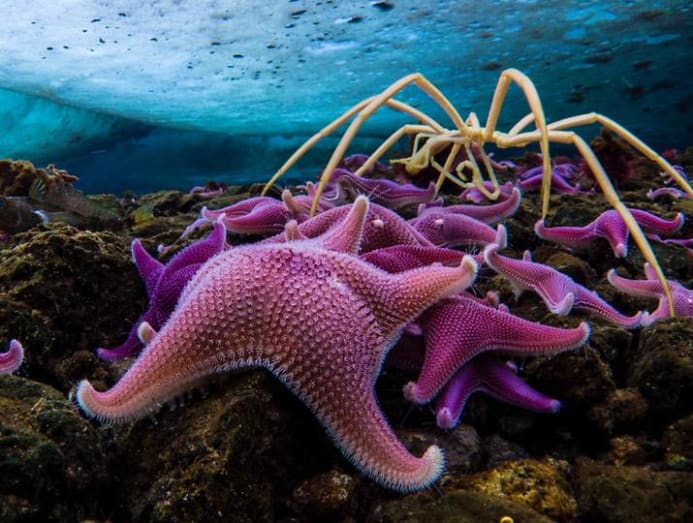
At the same time, 'Nosotros also want to point out that it's not as well late. At that place is hope. Nosotros've got a story in Antarctica about where in that location's a ban on whaling. Information technology'due south meant that whale populations are starting to recover. I don't want people going away thinking it'due south all doom and gloom. I want them to think, 'The planet has got this amazing, rich diverseness of life. Yes, it's delicate. Yes, at that place are problems. Merely information technology'south not as well late to do something about it.' We can change things. We tin plough things effectually."
These are heartfelt words from a man who says, "Testify me a sunset or a sunrise whatsoever solar day – it still makes me grinning. And being outside watching wildlife – for me, there's nothing better."
Using drones, which save a huge corporeality of carbon, is ane of the ways in which the show can practice what information technology preaches.
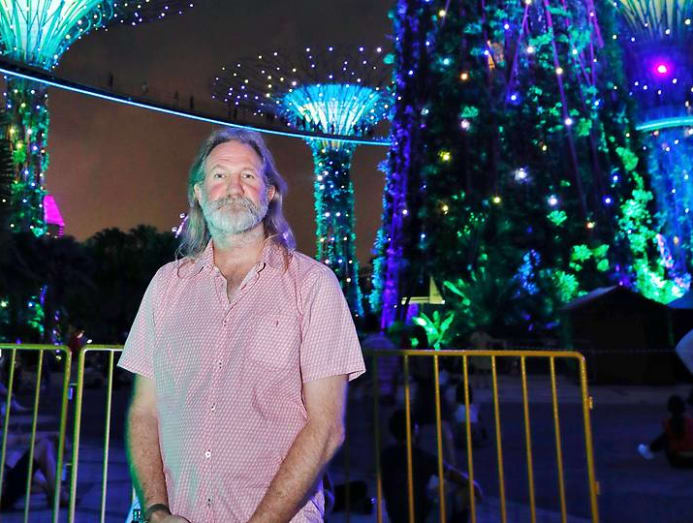
Alexander continued: "At that place are seven billion people on the planet. You don't have to do much. But do a little bit. Sir David Attenborough was asked the question, 'What can we do? He said, 'Well, just don't waste things. Don't waste product electricity. Don't waste food.' And you lot don't have to do a lot. Merely a few little changes to your lifestyle: Switch the lite switch off when you lot get out of the room and y'all're doing your little bit. Nosotros tin can do things, and that is the message – don't requite up, there is hope."
Take hold of the special premiere of Seven Worlds, One Planet on Nov 4 at 9pm on BBC Earth (StarHub Channel 407). Likewise available on the BBC Role player app.

Contempo Searches
Trending Topics
acostagailintence.blogspot.com
Source: https://cnalifestyle.channelnewsasia.com/entertainment/david-attenborough-bbc-earth-seven-worlds-one-planet-175456
0 Response to "Chased by rhinos, killer bees for a TV show – what’s it like working with David Attenborough?"
Post a Comment